A Tripartite Conceptual Model of Mental Disorder: Normative, Harmful, and Epistemic Criteria in the Japanese Context
DOI:
https://doi.org/10.55672/hpss2026pp1-4Keywords:
mental disorder, ICD-11, Japanese psychiatry, cultural normativity, epistemic criteria, philosophy of psychiatryAbstract
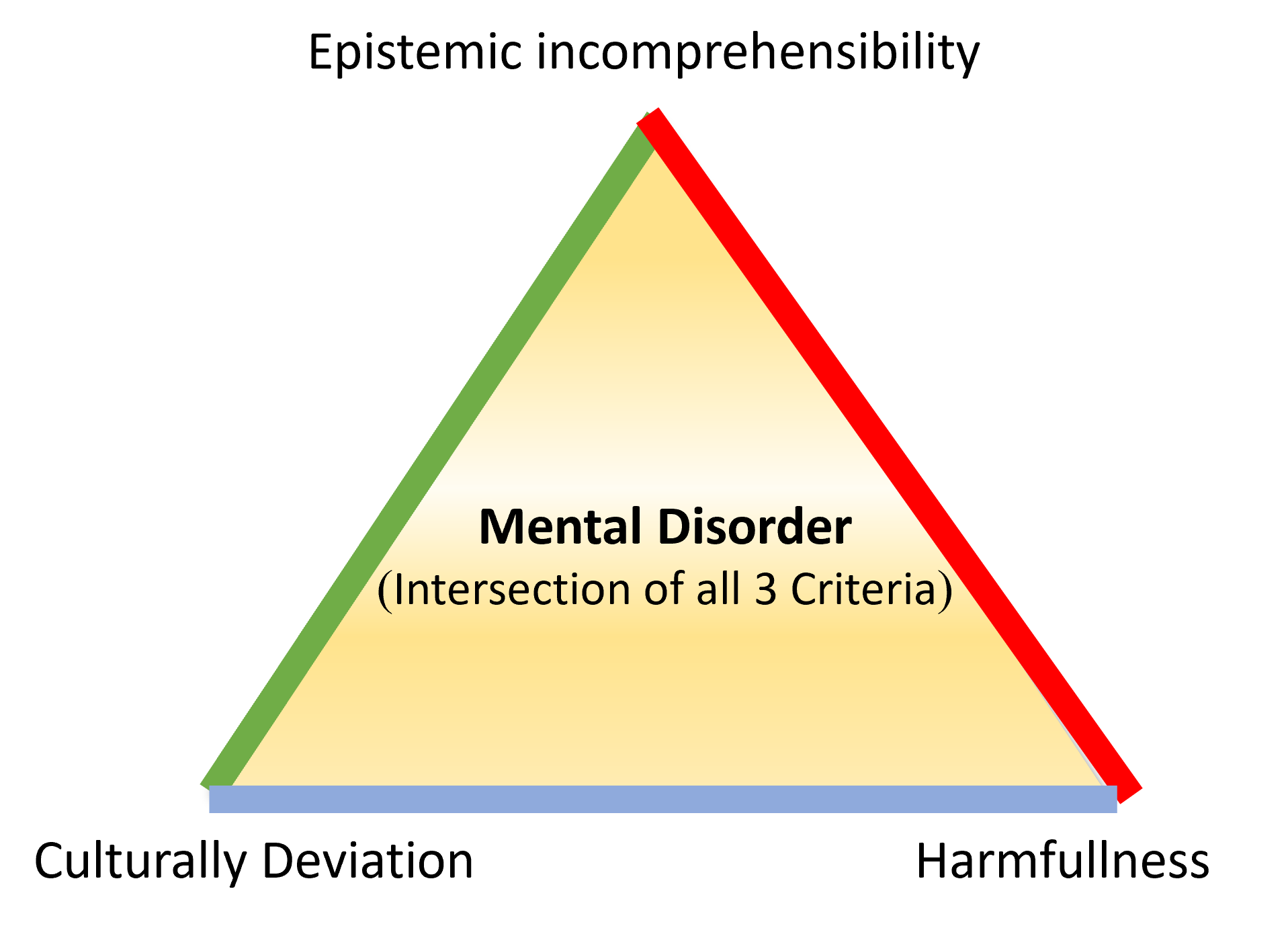
The concept of mental disorder remains one of the most philosophically complex and clinically significant constructs in psychiatry. Although international classification systems such as ICD-11 and DSM-5-TR provide operational definitions, fundamental conceptual ambiguities persist regarding the distinction between pathology, cultural variation, and socially deviant behavior. In Japan, where psychiatric practice primarily follows the ICD system and cultural context plays a central role in shaping normative expectations, definitional clarity is particularly important. This article develops a strengthened conceptual framework grounded in three interdependent criteria: culturally contextualized deviation, harmfulness, and epistemic incomprehensibility requiring professional explanatory systems. Through theoretical analysis and integration of philosophy of psychiatry, cultural psychology, and Japanese sociocultural considerations, the study proposes a refined descriptive definition of mental disorder. The model clarifies the boundary between pathology and rationally intelligible misconduct while maintaining compatibility with contemporary psychiatric practice.
Downloads
References
American Psychiatric Association. (2022). Diagnostic and statistical manual of mental disorders (5th ed., text rev.; DSM-5-TR). https://doi.org/10.1176/appi.books.9780890425787
Doi, T. (1973). The anatomy of dependence. Kodansha International.
Foucault, M. (1988). Madness and civilization: A history of insanity in the age of reason (R. Howard, Trans.). Vintage Books. (Original work published 1961)
Kendler, K. S. (2016). The nature of psychiatric disorders. World Psychiatry, 15(1), 5–12. https://doi.org/10.1002/wps.20292
Szasz, T. S. (1960). The myth of mental illness. American Psychologist, 15(2), 113–118. https://doi.org/10.1037/h0046535
Sue, D., Sue, D. W., Sue, D. M., & Sue, S. (2019). Understanding abnormal behavior (11th ed.). Cengage Learning.
Wakefield, J. C. (1992). The concept of mental disorder: On the boundary between biological facts and social values. American Psychologist, 47(3), 373–388. https://doi.org/10.1037/0003-066X.47.3.373
World Health Organization. (2019). International classification of diseases for mortality and morbidity statistics (11th ed.; ICD-11). https://icd.who.int/
Published
How to Cite
Issue
Section
License
Copyright (c) 2026 HPSS

This work is licensed under a Creative Commons Attribution-NonCommercial 4.0 International License.